Monday, June 30, 2008

eng 273: dante's *inferno*: a trip to hell


illustration by Gustave Dore, from wikipedia

Check out this gorgeous flash website representation of the epic poem. Also, check out the ELF website, which features a variety of translations, illustrations, and general helpful links. And, enjoy this trailer for a filmic update of Dante's classic, done "in toy theater style." The film will be released on DVD in August 2008.

For more info on Dante Alighieri, check out this entry at the Stanford Encyclopedia of Philosophy.

Dante, part. affresco della cappella di San Brizio, Duomo Orvieto,
by Luca Signorelli, from wikipedia


And here's a helpful link about terza rima, the poetic style Dante invented.

And, a NEW link to an awesome site: DanteWorlds!

Wednesday, June 25, 2008

upward bound: alice walker and elvis presley

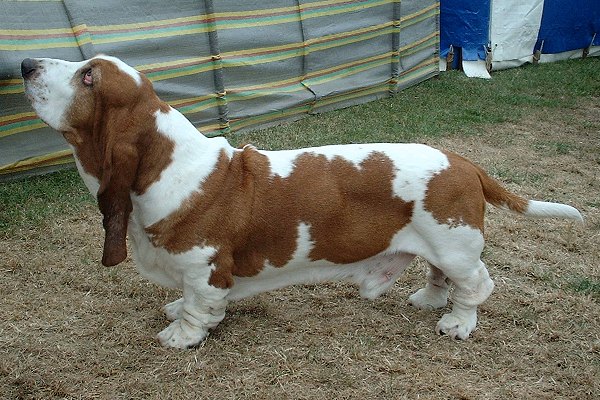
basset hound, from wikipedia, photo by Sannse at the city of
Birmingham Championship Dog Show

Alice Walker's short story "Nineteen Fifty-Five,"fictionalizes and describes the relationship between Willie Mae "Big Mama" Thornton and Elvis Presley through the two main characters. Thornton's chart-topping song "Hound Dog" was also a chart-topper for Elvis. Check out this video of Elvis performing the song back in the day...And here's Big Mama Thornton singing the song...What differences do you notice in the two performances? Walker wants us to consider the connections between fame and race and ownership. How might these videos help us make these connections?

Tuesday, June 24, 2008

eng 273: letters from a peruvian woman: inca

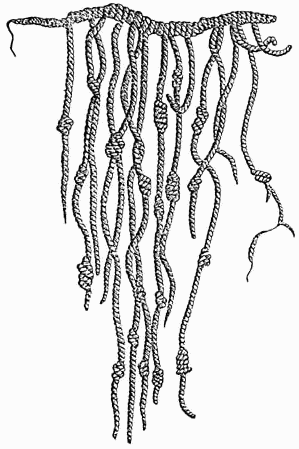
from Meyers Konversationlexicon of 1888, via wikipedia


For information on the Inca culture, check out this link to a PBS special or this website. And, though this wikipedia entry needs citation, it includes some wonderful illustrations, including this one of the quipu that Zilia uses to communicate with Aza/"write" her letters before switching to French.

Why does Graffigny blend 18th century French culture with 16th century Inca culture without any indication that these cultures don't exist simultaneously?
How might these cultures overlap? What's Zilia's role in these cultures? What's the role of women in general in both of these cultures?

Thursday, June 19, 2008

eng 273: siddhartha

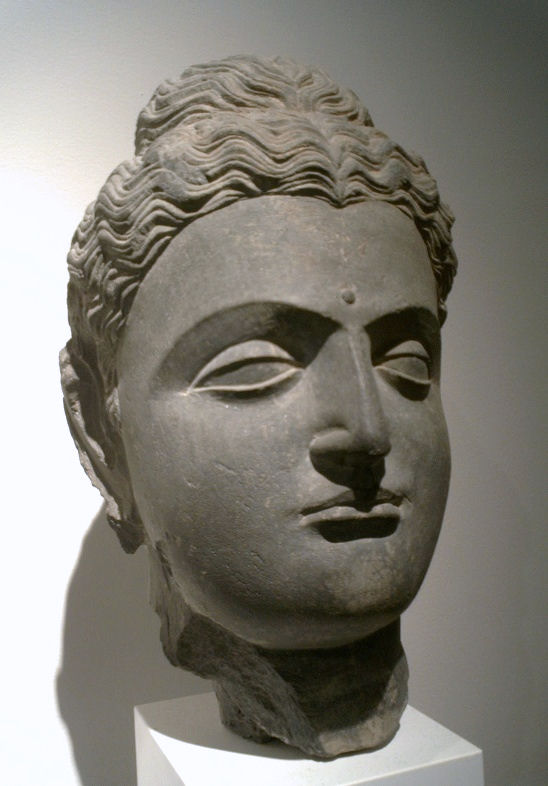
Gandhara Buddha, 1st or 2nd century CE, MuseƩ Guimet, from Wikipedia


Herman Hesse's novel Siddhartha, published in 1922, took many people around the world on "a journey to the East." The novel was first published in English in 1951, and was greatly admired by many in America, particularly those counterculture rebels who were skeptical of Cold War fears and a booming post-war materialism. They wanted to find a different path, a middle way--a way not unlike that of Siddhartha and Gautama--our protagonist and the Buddha he encounters on his spiritual journey. The Supreme Buddha is generally called Siddhartha Gautama--see this website for a description of him. Consider why Hesse includes a character named Siddhartha AND Gotama, who is clearly supposed to represent the historical Siddhartha Gautama.


The novel is filled with references to Hinduism and Buddhism, and to delineate the overlaps, distinctions, and historical relationship between the two religions is a much greater discussion than we have time for. This website includes interesting information on Buddhism. To understand the concepts of brahmin, atman, samsara, karma, and moksha, see this website.
In the section of the novel where Siddhartha converses with Gautama, they discuss what are known as The Four Noble Truths, one of the foundational tenets of Buddhist Wisdom.

Another interesting representation of the path to Enlightenment is the Ten Ox Herding Pictures. These visual and textual representations of the path to Enlightenment are mainly associated with Zen Buddhism, a school of Buddhism that focuses on meditation as the path to liberation.

One question to consider: how is Candide's grappling with Pangloss' optimism similar to and different from Siddhartha's grappling with Hindu and Buddhist belief? How does the sufficient reason of Leibniz compare to the karma of Buddhism?

Monday, June 9, 2008

English 273: Ahhh, Enlightenment!

The Age of Enlightenment is also known as the Age of Reason, a time when rationalism and a mechanical view of the cosmos supplanted a more organic model. This was also the time when society began to shift towards Industrialism, Urbanization, and all those other hallmarks that we mark as modernity. Check out this website for a succinct yet detailed account of the Enlightenment, the historical and philosophical background leading to this new Era, and the tenets of the major thinkers, including our very own Voltaire.

In Candide, Voltaire critiques the German philosopher Leibniz, and has a great deal of fun showing the folly of his way of thinking via satire. What does Voltaire have to say about the rational, scientific, Enlightenment model versus the optimistic argument that everything is for the best? How are Enlightenment values, philosophies, etc. prevalent in contemporary society? Do we see any problems with the Enlightenment view of the world?

Monday, May 26, 2008

will write for cheese: uwc colloquium presentation

Today I want to share one popular in class activity I've used in English 102--Cheese (or sometimes chocolate, but in Wisconsin, cheese seems somehow more fitting) Tasting.


First, I'll share a bit of context. In my English 102 classes I like to begin with a narrative essay assignment, and recently I've been teaching a food culture narrative essay. My reasons for beginning a semester of analytical, argumentative, and research based writing with a narrative are several:
1. Writing narratives allows students to challenge their idea of what an essay IS, what it looks like, and what it does.


2. Writing narratives encourages students to focus on language and specificity, skills that are often desperately lacking and necessary in ANY kind of writing.


3. Writing narratives takes off some of the pressure of other kinds of essay writing and helps build student confidence, which is essential for their success in class.


4. Writing food narratives in particular requires students to look much more closely at something they do everyday with a critical and descriptive eye.


5. Writing food narratives is the perfect entrance point for classroom discussions of consumption, identity, culture, and even politics.


To help students build descriptive skills, I have them do several in class activities, including a cheese tasting.


I announce the cheese tasting day to students ahead of time and tell them to bring cheese if they'd like (though bringing cheese is voluntary).


On tasting day, I have each student fill out an index card with info about their cheese: variety, it, where is it from, and why they brought this particular cheese to class. They place their cheeses and cards on desks at the front of the room, and then students gather cheese samples, writing down which ones they've selected. We then spend a little time discussing HOW to taste (rather than eat) cheese, focusing on using our 6 senses. To aid in this, I share tasting resources such as this link from a Dairy Organization, "How to Evaluate Cheese like a Pro," which nicely explains why a multi-sensory tasting approach works best, and also provides tips for how to describe sensory experiences with cheese.


I then have students begin tasting and recording notes, writing down descriptions for each of their senses. While students are tasting the cheeses we look at a few Wisconsin cheese resources to connect our tasting project to a larger discussion of the importance of cheese to our region.


As the tasting winds down, I have students compare notes and pick favorites. Students then share their descriptions of the cheeses with the class. Their preferences and descriptions often will be vastly different, nicely proving that being specific and precise with language is important because individual perception varies.


When I'm linking the tasting into a thematic discussion of local foods, as I'll be doing fall semester, I'll also show the class this website, which describes the Lovavore Challenge. UW- Manitowoc is hoping to pilot a brief (1 week) Locavore project as part of our campus Common Theme, Blue Devils Go Green, programming next year.


Cheese Tasting Day is often one of the more popular and memorable activities of the semester; students often comment on how much they love this activity. I will continue to use and refine this activity because it allows us to connect to the class material on several levels, and further engages our minds as well as our mouths:)

Tuesday, May 20, 2008

merci, danke, gratzi

This year has been an exciting one. Though I've been teaching for many years, this was my first year on the tenure track. The difference is that tenure-track positions mean the school is invested in keeping me around, that is, if I do my job well. I have to prove that I'm keeping active in my field, constantly improving my teaching, and becoming involved in the life of the campus. It's sort of a probationary process. 

I wanted to take a few moments to thank all of my colleagues, and especially my students, for making this year one to remember. It's been challenging and delightful, and I've learned so many lessons myself that I feel rather like a student!

I especially want to thank my students for sharing their ideas, dreams, and fears with me in their essays and classroom discussions. From lighthearted conversations about fashion and The Devil Wears Prada, to discussions of the American Dream, to debates about the nature of love, to the impact of popular music, to an understanding of our multicultural society, we've all shared so much. 

I can't wait to continue the journey and learn even more next year! I'm looking forward to going global, with my Studies in International Literature class this summer; to helping first-year students transition to college in my LEC 100 class in the fall; to exploring eco-literature in English 102 and American Lit in the fall; and, finally, to further discussing multiculturalism in Multiculti Lit in the Spring.

Additionally, I can't wait to start celebrating our Common Theme, Blue Devils Go Green next year, and kicking off the new UW-Manty Multiculti's! 

Please keep in touch over the summer, and, check back here for suggested summer reads!