Showing posts with label eng 272. Show all posts

Tuesday, December 9, 2008

eng 272: jhumpa lahiri, "sexy"

Mapparium, Mary Baker Eddy Library, Boston, MA. courtesy of misterbisson, on wikipedia, and licensed by the GNU free documentation license.


Jhumpa Lahiri is the Pulitzer Prize winning author of Interpreter of Maladies (1999), in which the short story "Sexy" first appeared. Those of you in my ENG 278 class last semester are familiar with her novel The Namesake; those of you taking my ENG 278 class next semester will read her latest collection of short stories, The Unaccustomed Earth. Lahiri often writes about characters who are attempting to make a home wherever they are, dealing with issues of cultural strangeness, and the tension between cultural assimilation and holding on to cultural traditions.

"Sexy" ingeniously interweaves maps as an important metaphor of place, through the Mapparium, as well as through the quiz of countries and capitals.

Lahiri also plays with the idea of language and words, showing Miranda attempting to write her name in Bengali and unsure whether she's written Mira or Mara. Dev tells her that Mira is an Indian name; Mara is also a significant name, bringing with it a whole host of allusions to evil forces/demons who tempt the Buddha away from his religious mission via beautiful women.

She also integrates Kali, the destructive mother goddess, who is proudly hanging on the wall of the Dixit's home.

Monday, November 24, 2008

eng 272: good country people

Flannery O'Connor's short story "Good Country People," supposedly written in four days, teases readers with humor and horror, creating what many critics call the "grotesque."

A few quotes from critics about the story:

from Kate Oliver, writing in Explicator 62.4
"physical afflictions [...] symbolize emotional, intellectual, and spiritual impairment" (233-234).

Oliver also discuss the particularly significance of Joy/Hulga's specific ailments...

Ruth Holson, writing in an earlier edition of Explicator 42.3 explains that Hulga=Helga, which is a Norwegian name meaning "holy one" (59).

And, finally, Mark Bosco's article "Consenting to Love: Autobiographical Roots of "Good Country People," from Southern Review 41.2, explores the relationship O'Connor had with a Danish textbook salesman as an autobiographical connection to the story.

Saturday, November 15, 2008

eng 272: "this is the beat generation"

This week we spend time with the Beat Generation, a counter-culture literary movement poised between WWII and the more free-wheeling movement-laden era of the 1960s.


Writers Jack Kerouac, Allen Ginsberg, and William S. Burroughs form the mythical triumvirate of the Generation, and readers, writers, and scholars have reacted to and emulated them throughout the decades since On the Road and Howl, those iconic works, were first published in the late 1950s.


However (in)famous these fellows were, they alone do not define the Beat Generation. An entire constellation of writers and "minor characters" surround them, and their personal stories and artistic creations are fascinating read alongside the more famous works and in their own right.


The internet is rife with Beat websites, videos, photos, and links. I've provided a few here to start your exploration of this often mythologized and misunderstood movement.


Literary Kicks is a great blog for literary conversation, including Beat specific info.


For a behind-the-scenes look at Jack Kerouac's myth, check out this NPR website.


Here's a video of Diane di Prima reading poetry at UC Berkeley

And here's a video of Gary Snyder talking about ecology and poetry.


Kerouac reading the ending of On the Road, set to a montage of photos from the BG.


For you indie music fans, check out Death Cab for Cutie's song "Bixby Canyon Bridge," a song obliquely about Jack Kerouac.

Thursday, November 13, 2008

eng 272: death of a salesman and gender politics

One philandering husband. One worrisome housewife. Two womanizing "Adonises."

What's a reader to do?

While we have been reading Arthur Miller's classic, Pulitzer Prize winning play Death of a Salesman through the lens of the American Dream, another interesting way to approach the text is through an exploration of gender roles.

To what degree is Willy's despair and downfall caused be his ideas of masculinity? What messages have Happy and Biff received about being manly? This blogger believes that Willy Loman offers us examples of "Unmanliness." What does it mean to be a man in post-WWII America anyway? For a more sympathetic view of Willy's struggle, look here.


Literary critic Terry Thompson posits that Willy, along with Happy and Biff, are locked in a kind of "perpetual adolescence," symbolized by their lack of facial hair: "Thus, in the Loman household, the cheeks, chins, and upper lips of the males are peachy, soft, and schoolboyish, punctuating their lack of real manhood, their inability to assume the stressful societal roles assigned to grown males" (246). Do the Loman "men" understand what it means to be a man? Why are they stuck?

And what about the women? How do we reconcile Linda and the Other Woman? What about the women that Happy and Biff "make," especially the wives and fiancees of Biff's superiors who fall for his advances? Some of you believe that Linda is to blame for Willy's downfall--why do you think she is a) responsible and b) powerful enough to stop him? To what degree does Linda's role as a housewife contribute to the family dysfunction?

Feminist Betty Friedan argues in The Feminine Mystique that housewives were suffering from "The problem that has no name," which was basically a limited life of few opportunities outside of the home and constricting gender roles. Can we see Linda as an example of this problem?

To what degree is Miller's play a commentary on the gender roles of post-war America? And how do these roles fit in with our idea of the American Dream?


Works Cited
Thompson, Terry. "Miller's Death of a Salesman." Explicator 63.4 (2005): 244-47. MLA International Bibliography. EBSCO. UW-Manitowoc. Manitowoc, WI. 13 Nov. 2008.

Thursday, October 30, 2008

eng 272: edgar allan poe and gothic fiction

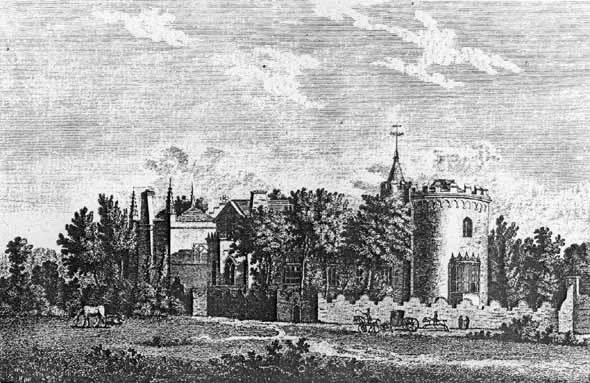
                                                                                        Strawberry Hill, Horace Walpole's gothic home, image from wikipedia


Crumbling Castles! 

Maniacal Mansions!

Aberrant Abbeys!

This is the stuff of gothic fiction, a genre that blends romantic fiction and horror fiction to create narratives that are psychologically gripping, emotionally complex, and downright scary. 

This website, created by college students, discusses the main attributes of Gothic fiction, including the primary emphasis on setting as an expression of the emotional and psychological reality of the characters, who are living in a fallen, chaotic world. 

What's particularly interesting in Poe's story is the use of stereotypical Eastern imagery, from opium dens to Arabesque patterns, to sarcophagi. How is Poe using this imagery in juxtaposition to the Germanic Romanticism? 

We must also consider our narrator--how reliable is he? After all, he is strung out on opium for most of the story...

What, finally, is Poe's message about love?


Sunday, October 19, 2008

eng 272: langston hughes, the harlem renaissance, and the blues

                                             photograph of Langston Hughes taken by Carl Van Vechten, 1936. from wikipedia and in the public domain. 


Langston Hughes is most often read as a poet of the Harlem Renaissance, an exciting time of literary and artistic creation in the 1920s. Hughes did write other genres, but we're focusing on a small selection of his poetry. Like many poets of the 20th century, Hughes was influenced by Walt Whitman, particularly his emphasis on using personal experience to raise larger issues.  

Hughes dedicated his writing to representing an African American experience, as did the other writers and artists of the Harlem Renaissance. His poems reverberate with sadness, struggle, and hope. Many of Hughes' poems were influenced by the popular African American musical forms of the day jazz and blues. Consider why these musical forms were so influential at the time, and became such an influence on poetry...

For a real treat, listen to Hughes reading his poem "The Negro Speaks of Rivers."

Thursday, October 16, 2008

eng 272: richard wright's "the man who was almost a man"

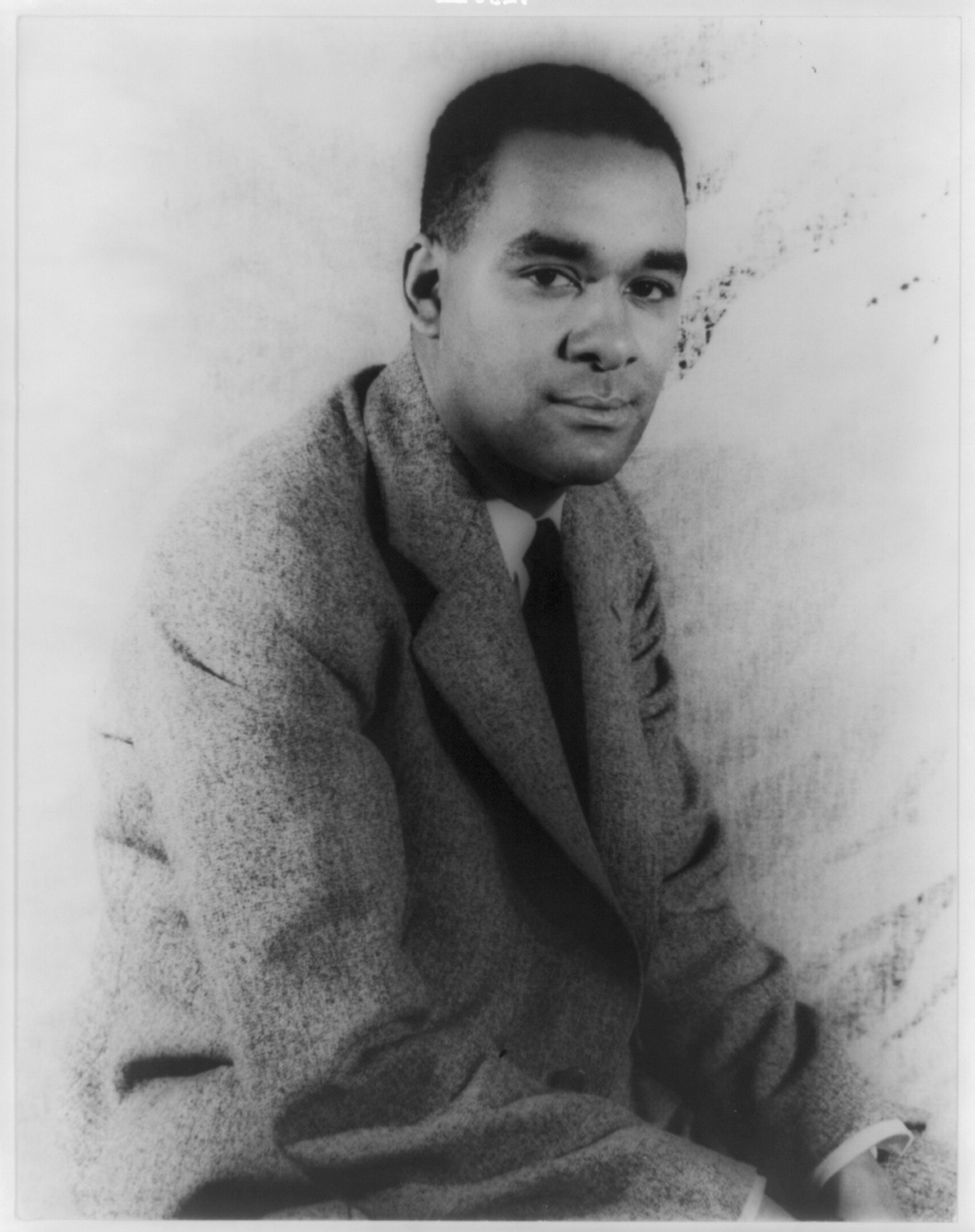
photograph of Richard Wright by Carl Van Vechten, 1939. from the Library of Congress Collection, and in the public domain.


Richard Wright's most famous novel, Native Son, explored the pervasive racism and violence of the early twentieth-century. Wright advocated for African American writers to use their pens and literary influence to critique the racist American culture that proliferated in the period after the Civil War and before the Civil Rights Movement.


He famously dismissed Zora Neale Hurston's novel Their Eyes Were Watching God, which we'll be reading shortly, because her depiction of the African American race did not explicitly highlight racism and prejudice. Rather, her novel focused on the intimate life of one woman and the men she loves. Wright's work forced readers to confront social and political realities, and remains popular to this day.


His short story, "The Man Who Was Almost a Man," raises important questions about masculinity, race, and class. What does it mean to be a man? To be a young African American man? How does one wield power in this world?

Tuesday, October 14, 2008

eng 272: the yellow wallpaper

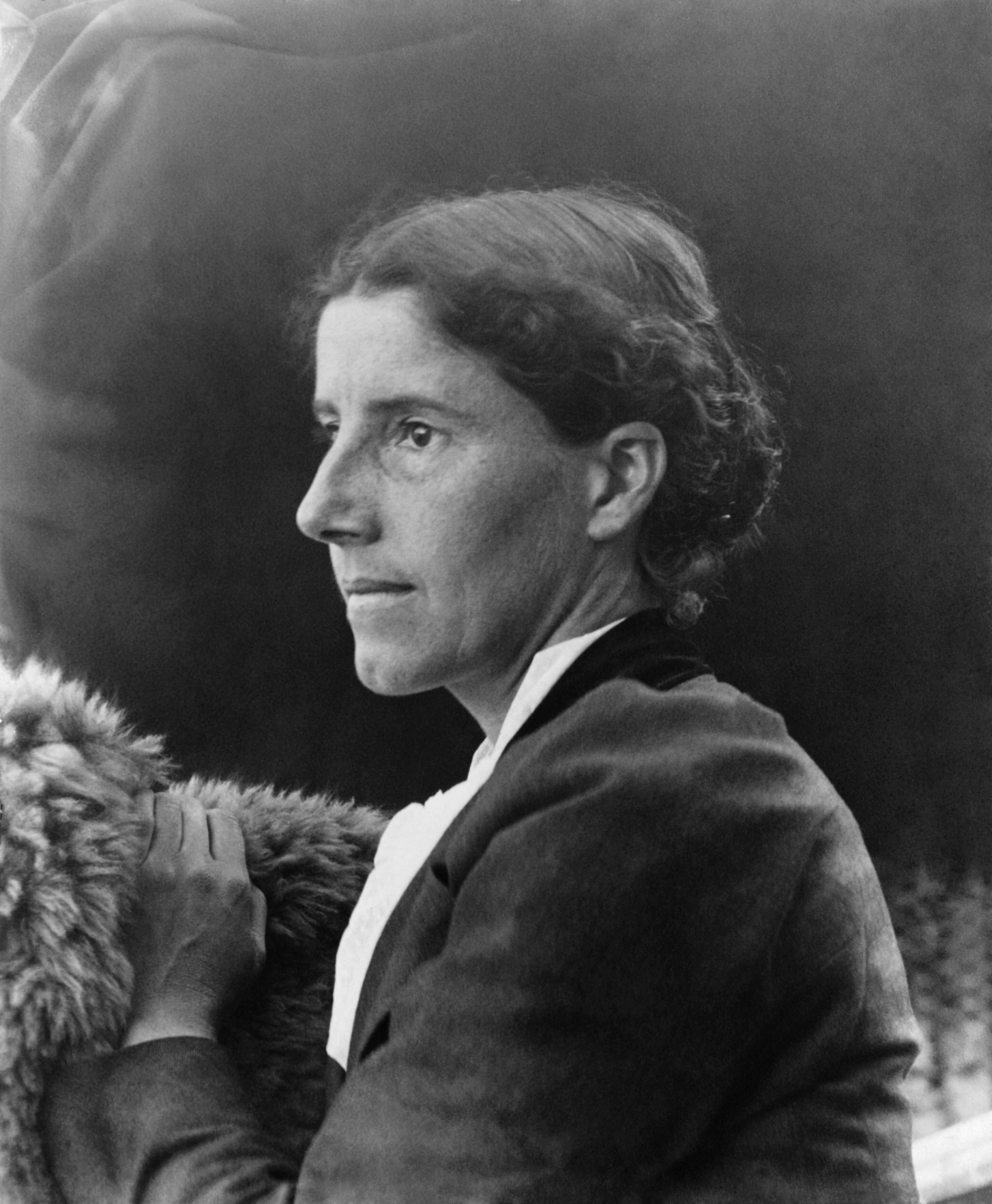
Charlotte Perkins Gilman, c. 1900, from wikipedia, in the public domain


Charlotte Perkins Gilman's haunting short story "The Yellow Wallpaper," comments on the prevailing treatments for women suffering from "nervous disorders. During the time in which Gilman was writing, women's roles in society were shifting ever so slightly, yet there was still a considerable movement to contain women. They were "hysterical" and subject to "nervous disorders," and the best way to treat this problems was with total bedrest. This confinement to the domestic sphere can be, as Gilman shows us, utterly destructive. Gilman emphatically states that she wrote this story with a specific purpose in mind: "to save people from being driven crazy" ("Why I Wrote the Yellow Wallpaper"). 

Check out these illustrations from The New England Magazine in 1892...

Sunday, October 12, 2008

eng 272: the new women: chopin, wharton, and gilman


At the Beach, by Charles Dana Gibson, 1901
courtesy of wikipedia; in the public domain


As we move from the nineteenth to the twentieth century, American literature reflects significant social changes. Emily Dickinson's and Walt Whitman's poetry alert us to a dramatic change in stylistics, as well as a seismic shift in the philosophy behind men's and women's social roles. The days of separate spheres, with men going out into the world and women maintaining the domestic realm were coming to a close. The "sanctity" of womanhood (the Cult of True Womanhood) and its attendant power were being challenged by a more secular movement of women to explore their full selves through work outside the home, political activism, and--shockingly--celebrating their sexuality. 


All three women writers we're reading this week wrote revolutionary exposés of women's lives. Kate Chopin's "The Storm" was seen as so racy that it wasn't published until 1969 (incidentally, the same year as the infamous "summer of love"). Edith Wharton's chronicles of the fall of the old New York aristocracy and the rise of the nouveau riche also touched on women's liberation and passion--consider the shocking truth at the heart of "Roman Fever." And Charlotte Perkins Gilman, perhaps the most strikingly political of the three authors, takes on the medical establishment and its treatment of "women's issues," as well as the social system that contrives to isolate and infantilize women in "The Yellow Wallpaper."

To best understand the revolutionary nature of these three stories, it's helpful to have a sense of both the Cult of True Womanhood and the New Woman

How do these stories show a shift in women's roles? Do vestiges of the old roles remain? How do women help and/or hurt one another? What roles does class and race play into these stories, as well as gender? 

Wednesday, October 8, 2008

eng 272: sounding out barbaric yawps

Walt Whitman, photograph by Samuel Hollyer of a daguerreotype by Gabriel Harrison (original lost), circa 1854, printed in the first edition of Leaves of Grass, courtesy of the Bayley Collection at Ohio Wesleyan, from whitmanarchive.org


Walt Whitman, or Uncle Walt, as he's affectionately known, is considered by many scholars to be the first truly American poet, writing in a distinctive, revolutionary style, in an entirely American manner. Stylistically, he's famous for using poetic catalogues, long rhythmic lines, and repetition. Content-wise, Whitman was also revolutionary, celebrating the body in all its messy, lusty glory, and his all-inclusive sexuality created such a stir that his poetry was repeatedly the subject of obscenity claims.


He followed Emerson's advice about the role of the poet, creating a poetic voice that was of everyday working people and celebrated everyday existence. He wrote, in the Preface to the 1855 edition of Leaves of Grass that" The United States themselves are essentially the greatest poem," and that "Their Presidents shall not be their common referee so much as their poets shall. Of all mankind the great poet is the equable man" (998). What about poetry and the act of writing it equalizes us and makes us fit for the highest office of the land?


Also in the Preface to LoG, Whitman makes a powerful statement of his philosophy:
"This is what you shall do: Love the earth and sun and the animals, despise riches, give alms to every one that asks, stand up for the stupid and crazy, devote your income and labor to others, hate tyrants, argues not concerning God, have patience and indulgence toward the people, take off your hat to nothing known or unknown or to any man or number of men, go freely wit powerful uneducated persons and with the young and with the mothers of families, read these leaves in the open air every season of every year of your life, reexamine all you have been told at school or church or in any book, dismiss whatever insults your own soul, and your very flesh shall be a great poem and have the richest fluency not only in its words but in the silent lines of its lips and face and between the lashes of your eyes and in every motion and joint of your body..." (1000).

The Walt Whitman Archive online contains multitudes of resources for Whitman scholars and fans alike.

Monday, September 29, 2008

eng 272: transcendentalism


walden pond, from wikipedia


This week we're reading some of the most critically acclaimed and famous American authors of the nineteenth century, and arguably of all American literary history. These writers are considered ground breaking, as well as key members of the American Renaissance because they established distinct American literary and philosophical traditions rooted in individual experience and a kind of Idealism. The Transcendentalist writers not only created philosophical, political prose pieces but also poetry and first person non-fiction narratives.

For an extended discussion of Transcendentalism, see the Stanford Encyclopedia of Philosophy. PBS includes a less technical discussion of Transcendentalism here

Emerson's landmark essay Nature, first published in 1833, is a challenging read. For help understanding his philosophical musings on the relationship between humans and Nature, check out the Cliff Notes.

You can also check out Professor Eric Steinhart's commentary on the text; he looks at specific sections of Nature through a philosophical approach. 

Emerson famously stated in an 1841 speech that transcendentalism "is Idealism," as it was defined at the time. How do we define Idealism today? Can we trace our understanding and definitions of Idealism back to Emerson?

Friday, September 26, 2008

eng 272: dr. j's quick writing tips

For any piece of writing, you should:

1. Consider your APPM (audience, purpose, persona, and message)
2. Err on the side of specificity rather than generality
3. Use concrete, vivid, specific language
4. Avoid empty words (got a lot, good bad, just, really, very...)
5. Use MLA format for your essay
6. Use MLA citation
7. Use quote sandwiches for ALL quotations
8. Begin with a clear, engaging intro: catchy opening, mention whatever text you're analyzing by full title and full author name, thesis statement
9. Create a specific, focuse thesis statement
10. End with a rather traditional conclusion

eng 272: william apess and the indian removal act of 1830


frontispiece from Apess' book Native of the Forest, 1831, from wikipedia

William Apess' impassioned "An Indian's Looking-Glass for the White Man," published in 1833, three years after the Indian Removal Act was passed by the United States Government. This act effectively removed most Native Americans living East of the Mississippi to designated lands West of the Mississippi.
Let's explore Apess writing in terms of his APPM (audience, purpose, persona, and message). Let's also read his work in the context of the Removal Act. Is Apess' argument effective? What does history tell us about this moment in time and its long-term ramifications for American culture?

Wednesday, September 24, 2008

eng 272: phillis wheatley

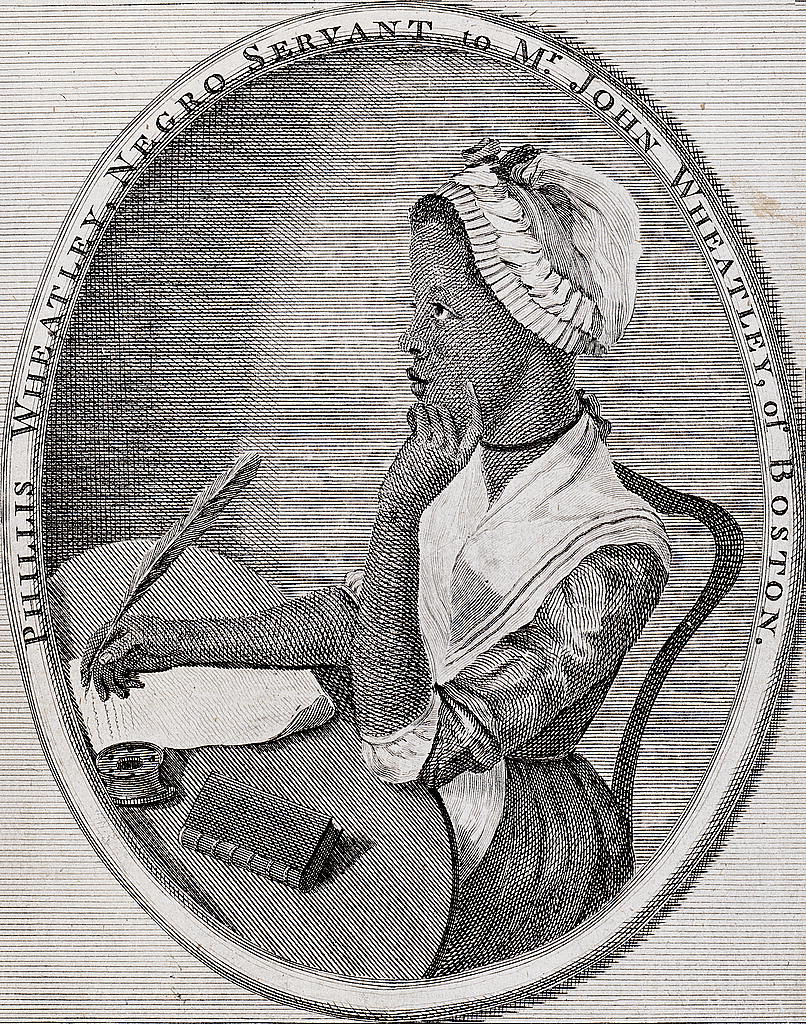
frontispiece to Wheatley's poetry collection, Poems on Various Subjects, by Scipio Moorhead, courtesy of wikipedia, and in the public domain


Phillis Wheatley, according to acclaimed scholar Henry Louis Gates Jr., "launched two traditions at once--the black American literary tradition and the black women's literary tradition. It is extraordinary that not just one but both of these traditions were founded simultaneously by a black woman--certainly an event unique in the history of literature--it is also ironic that this most important fact of common, coterminous literary origin seems to have escaped most scholars" (qtd. in The Norton Anthology of American Literature, shorter 7th edition 420).


Wheatley's legacy is huge--she started two important, intersecting traditions. She also challenged the idea that women's writing was strictly confined to domestic concerns.


Check out this PBS website on Wheatley and her writings.

Tuesday, September 16, 2008

eng 272: salem witch trials


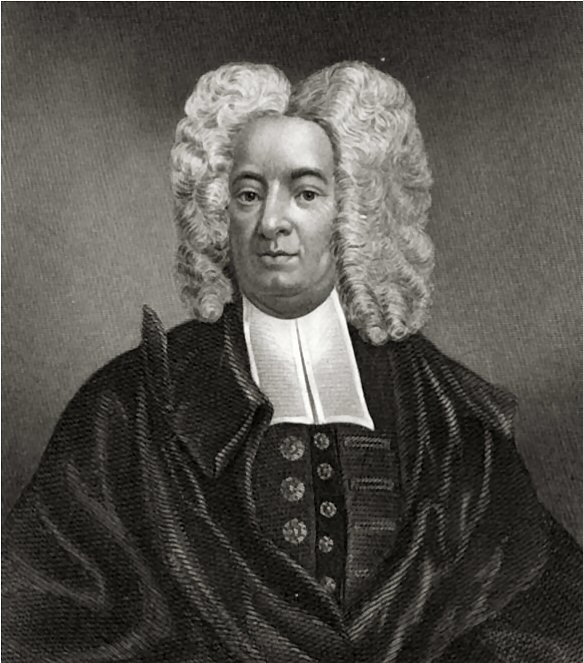
Cotton Mather, portrait by Peter Pelham, around 1700

The rest of this week, we're reading selections that deal with the infamous Salem Witch trials.


What exactly is the definition of a witch and/or witchcraft? Surprise--there's not just one definition.
Cotton Mather was a famous preacher in Boston, and much of his writing chronicles the history of the early Puritans. According to our anthology, the Norton Anthology of American Literature, shorter 7th edition, "He is often blamed for the Salem witchcraft trials...but he never actually attended one. His greatest crime was in not speaking out against those who he knew had exceeded the limits of authority. Mather saw the devil's presence in Salem as a final campaign to undermine and destroy religious community" (143). In the selections we're reading, Mather's stated goal is to chronicle the events as a historian rather than a theologian.


The woman in question is Martha Carrier. Examining her trial, as reported by Mather, in conjunction with bits of her biography, might help us question why she was accused of being a witch. Was it because she was an outspoken woman who questioned her place in the Puritan hierarchy? Was it because she was unjustly blamed for a smallpox outbreak? And, we might also ask why women in general were more likely to be accused of practicing witchcraft.


To see the progression of the witchcraft trials, check out this interactive website that shows the people involved over the entire month of March 1692. This website includes a variety of primary texts related to the trials. And this site includes useful narrative along with a timeline of events.

This National Geographic website includes a freaky interactive trial to simulate being part of the Salem witchcraft hunt and trial.

To plan a trip to modern day Salem, Massachusetts, look no further than the official tourist guide. Make sure to check out the Salem Witch Trial Memorial.


Tuesday, September 9, 2008

eng 272: will the real columbus please stand up?

posthumous portrait of CC by Ridolfo Ghirlandaio, 1520


"In 1492 Columbus sailed the ocean blue," or so we learned in elementary school.

Check out this website made by elementary school kids--what vision of Columbus do they have?

Click through this cute cartoon at the BBC website, also geared towards children.

And here's a "history" website that gives a brief account of CC's voyages. How does this account compare to CC's letters in our Anthology?

On the other end of the spectrum, we find websites such as this, claiming that CC and his missions participated in genocide.

Here's the MSN Encarta account of CC, and here's the ever popular wikipedia.
Historian James Loewen notes that "When Columbus and his men returned to Haiti in 1493, they demanded food, gold, spun cotton--whatever the Indians had that they wanted, including sex with their women. To ensure cooperation, Columbus used punishment by example. When an Indian committed even a minor offense, the Spanish cut off his ears or nose. Disfigured, the person was sent back to his village as living evidence of the brutality the Spaniards were capable of" (Lies My Teacher Told Me 61).
Columbus' missions took on a religious zeal, as this excerpt from a letter he sent Isabella and Ferdinand in 1496: "In the name of the Holy Trinity, we can send from here all the slaves and brazil-wood which could be sold" (Loewen 62).
Loewen also cites population statistics: "Estimates of Haiti's pre-Columbian population range as high as 8,000,000 people...by 1555, they were all gone" (63). Loewen cites a letter by Pedro de Codoba to King F. (1517): "As a result of the sufferings and hard labor they endured, the Indians chose and have chosen suicide. Occassionally a hundred have committed mass suicide. The women, exhausted by labor, have shunned conception and childbirth...Many, when pregnant, have taken something to abort and have aborted. Others after delivery have killed their children with their own hands, so as not to leave them in such oppressive slavery" (63).
How do all of these diverse texts compare to CC's own words? Why do some of the stories overlook CC's ethnocentrism, enslavement of "Natives" and sexploits? And, why overlook CC's despair about being "alone" in a strange land that we read in the excerpt from our anthology?
How does the whole of "American" history, and, more importantly for our class, literature, shift when we account for the darker truths of Columbus and the first European contact?